Contents
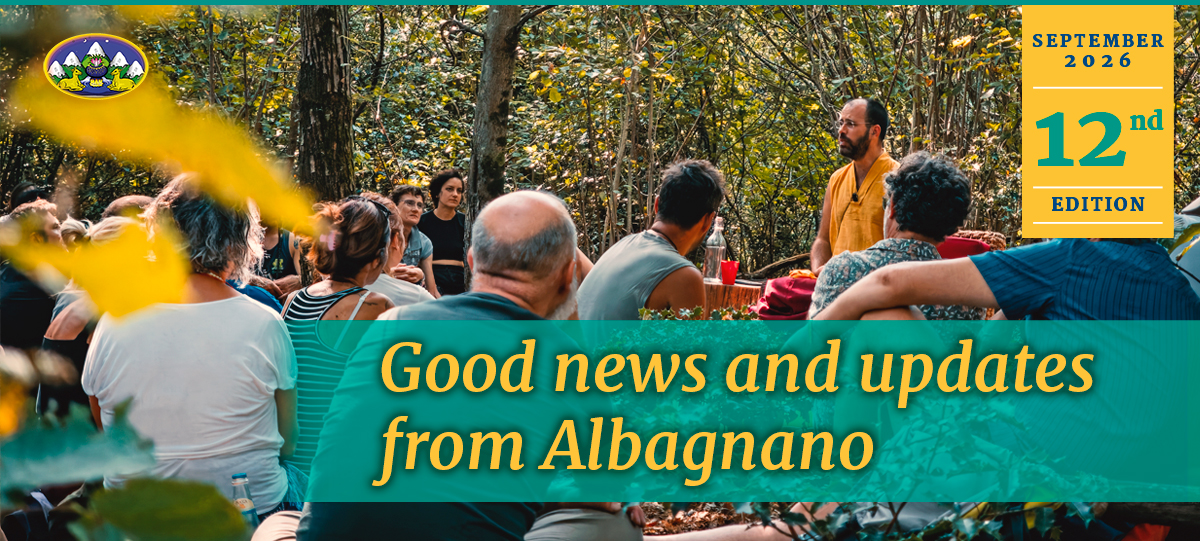
Lama Gangchen Rinpoche once told us: “We are building our Temple here in Albagnano. But remember, the most important Temple is nature.” He taught us to recognise the presence of the five elements in every being and shared with us effective methods for achieving peace with our environment, both inner and outer. He taught us about the transformative power of nature, showing us that we should not simply visit it for its beauty. He used to say: “Simply by being in nature we are transformed.”
We are nature. Understanding and coming to terms with this concept requires a shift in perspective, as we come from an anthropocentric view of the cosmos in which humanity is seen as separate from nature and superior to everything else. Buddhism guides us, step by step, towards a different and more coherent view of reality: the cosmos is sustained by a complex network of interactions in which every element and every being has its own importance.
Shakyamuni Buddha taught us that all sentient beings desire happiness and wish to avoid suffering; in this respect, for example, there is no difference between us and insects. In our recitations and meditations, we are encouraged to become familiar with the idea that all beings have been our mothers in countless past lives. Other meditations guide us to cultivate generosity toward the microorganisms living within us (the microbiota) without which we could not enjoy good health or an efficient digestive process. Our tradition offers countless examples.
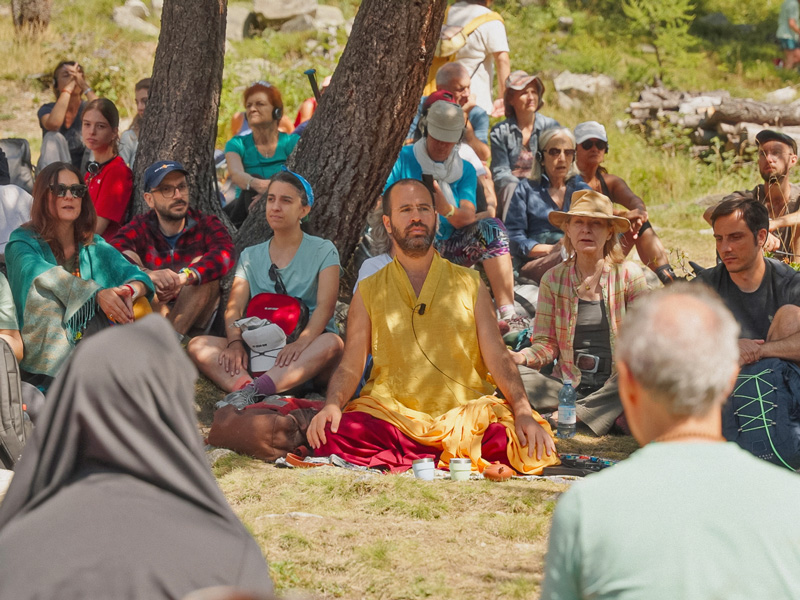
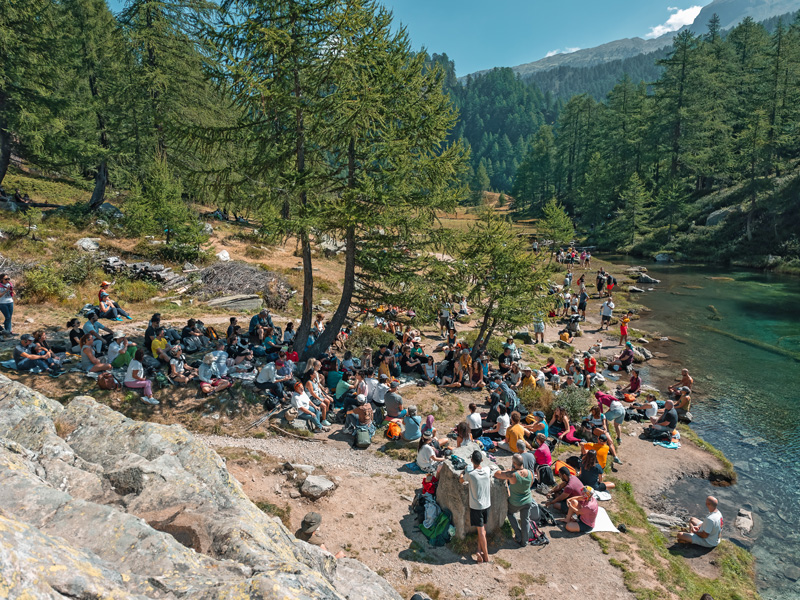
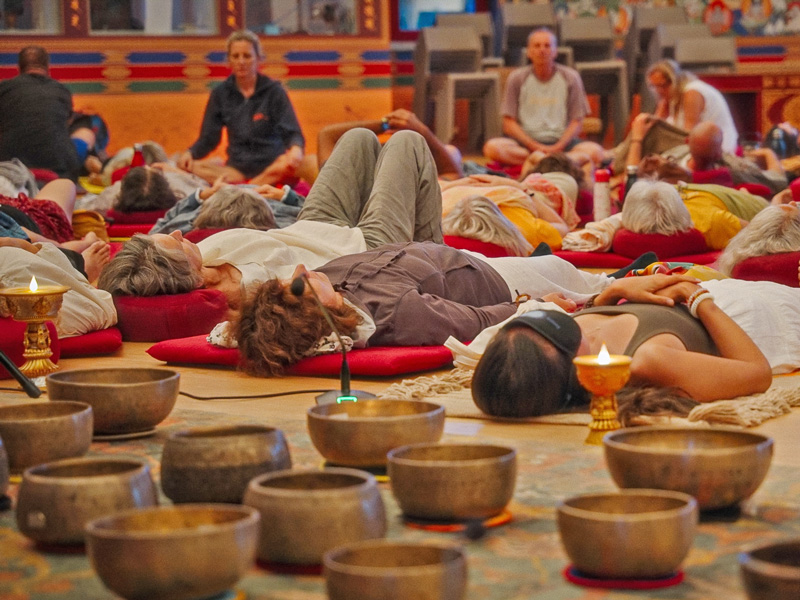
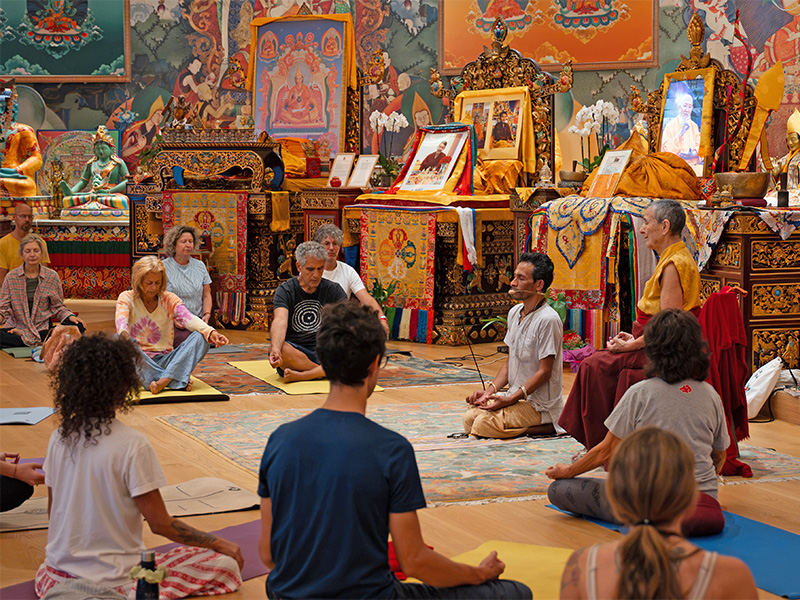
For the past three years, the Albagnano Healing Meditation Centre has hosted an initiative that unites science, practice and spirituality around the theme of Dharma and nature. This year, it took place from 15 to 23 August, featuring a wealth of activities ranging from Buddhist philosophy to Vedic yoga, from natural medicine to mindful dance, from the healing sounds of Tibetan singing bowls to mountain walks with teachings and meditations, and from astrology to the visual and creative arts in nature.
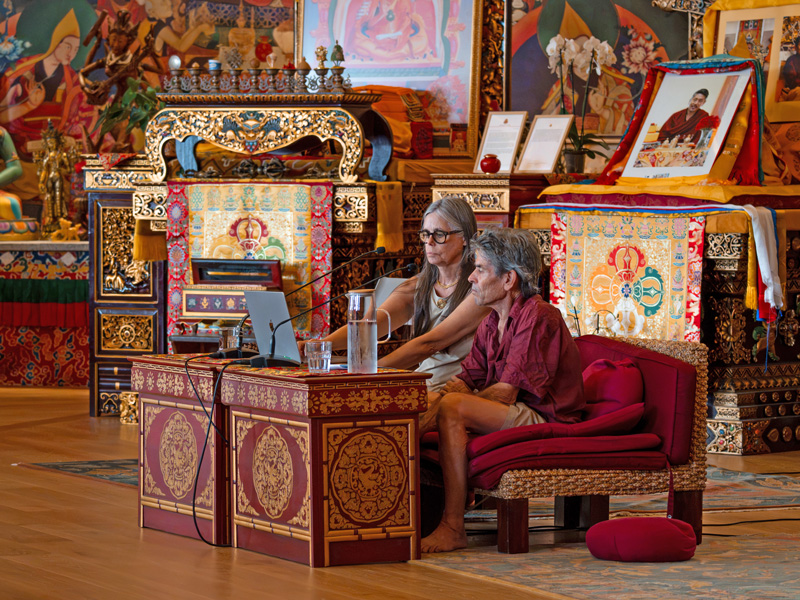
It is a programme that attracts all sorts of people: from disciples who have been studying under their teachers for years to those approaching the Dharma and the path to inner peace for the first time. The link between the inner journey and nature has always been very profound, so much so that yogis and meditators have always ventured into the woods and chosen caves and remote locations to facilitate a deeper contact with their inner selves. Albagnano is certainly not a remote place – just a 15-minute drive from the town of Verbania – but it is undoubtedly surrounded by nature, and this makes it ideal for initiatives such as this.
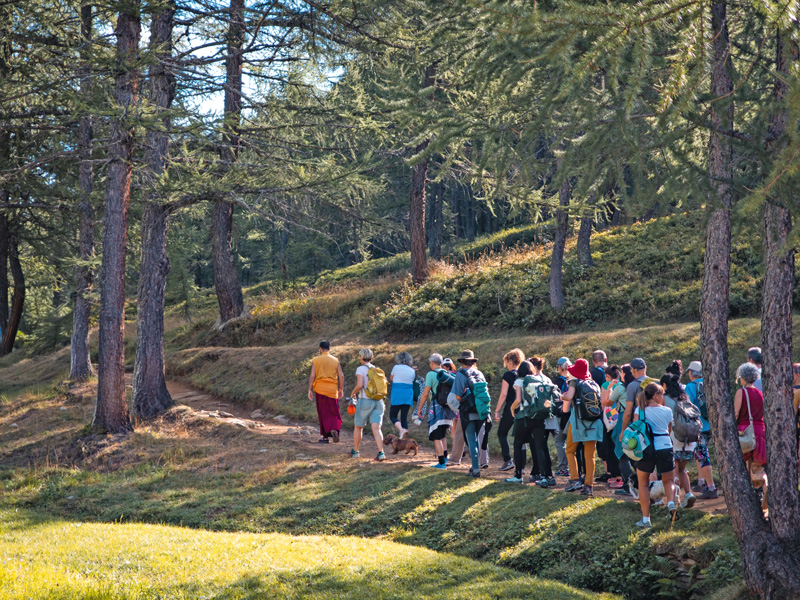
Lama Michel Rinpoche, in the teaching he gave at Alpe Devero during the walk with the course participants, said: “There are places which, by their very nature, possess a healing energy; they bring inner calm and help us to connect with ourselves. When we interact with our environment, we think mainly of our own needs; nature, on the other hand, creates harmony amongst all things. When we allow nature to interact spontaneously, it moves towards harmony. The more harmonious a place is, the more it transmits that harmony to us.”
If you are reading this news, you are part of this story. Your curiosity, your friendship, and your support help keep this place alive.
The generosity of giving material things is one of the pillars of Buddhist practice: sharing provides a solid foundation for inner growth and allows us to accumulate positive energy for the spiritual path. It enables us to “expand our ego” — as Lama Michel Rinpoche teaches — so that we become more altruistic, learning to recognise that there is no difference between self and others.
Since 1997, an organisation linked to the Albagnano Centre — founded through the inspiration and initiative of Lama Gangchen Rinpoche — has been helping us to open our hearts and share with those who have less. Originally named Kiurok Tsochun, meaning “help for the poorest and most forgotten”, it is known today as Lama Gangchen Help in Action. Enrica Mazzi, its president, shares some interesting details about it.
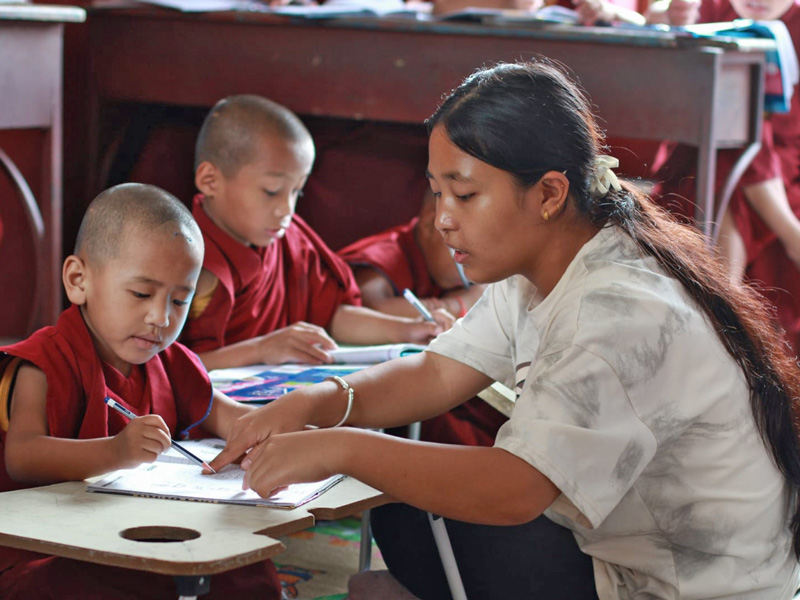
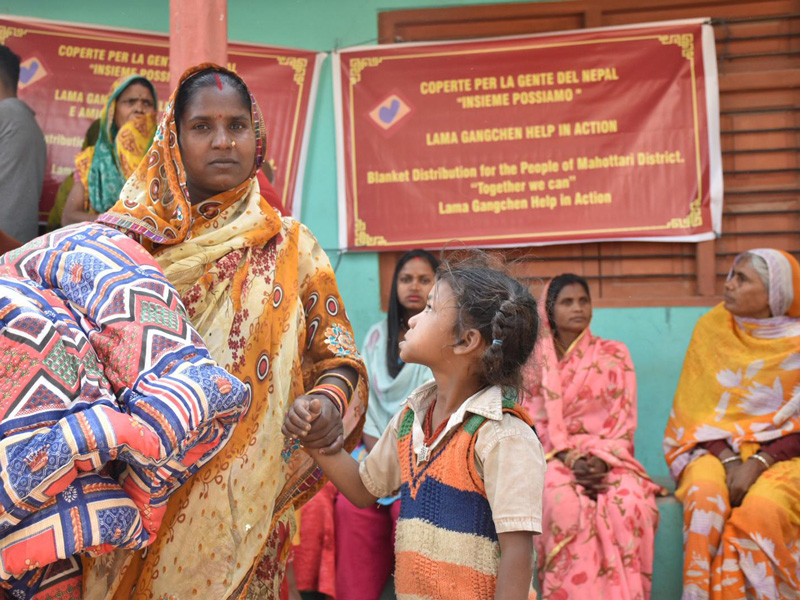
In the early 1990s, together with Lama Gangchen we used to visit Tibetan refugee camps and monasteries in southern India, where poverty was widespread. He received numerous requests for help. With great generosity, he would give away everything he had, keeping nothing for himself. Meanwhile, he would send us photos and letters from families in need. That is how, with the support of donors, the first long-distance sponsorships and aid projects came about.”
Enrica continues: “The association was formally established in 1997, and today there are 463 long-distance adoptions. There are about 535 active donors from Italy, Germany, the Netherlands, France, Switzerland, Spain, and Brazil, and the association has a network of organisations in the Netherlands, Germany, France, and Spain.”
The association has various projects, but one in particular truly touches the hearts of donors the most: “Without a doubt, it is the long-distance adoptions. The joy of watching a child grow up and of supporting and guiding them as they take their first steps into the world after finishing their studies is priceless.”
Today, there is much reflection on the approach taken by international organisations to providing aid, particularly with a view to moving beyond a welfare-based and paternalistic mindset: “At Help in Action, aid has always started from the grassroots level – that is, by listening directly to individuals and communities. Only later is this translated into action. Thanks to the extraordinary guidance of our teachers, we have been able to connect with a network of monks and volunteers who are genuinely united in their desire to help. This is truly a special opportunity for anyone wishing to provide support by addressing people’s real needs.”
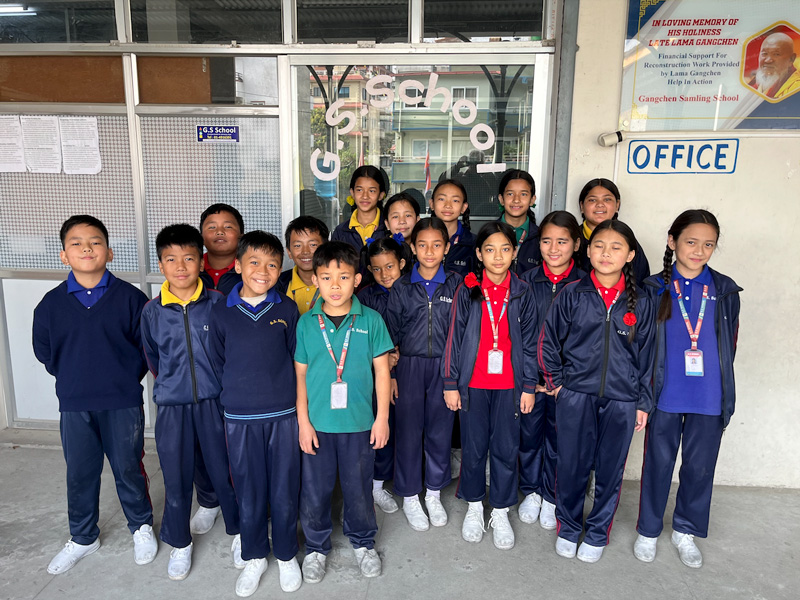
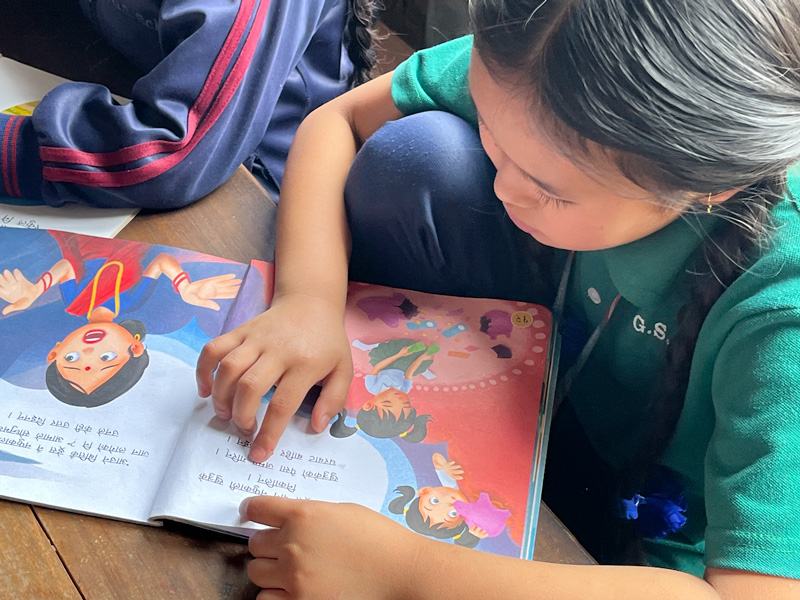
I ask Enrica what challenges the organisation faces today: “In an era marked by growing climatic, economic and geopolitical instability, the challenge is to strengthen the aid network for the most vulnerable populations and those hardest hit by emerging problems”.
In this context, Help in Action has launched a fundraising campaign for the emergency caused by the flooding of the Bhotekoshi River in the Rasuwa region, west of the Kathmandu Valley, following a glacier collapse on 26 August. The funds will be used towards the needs identified by the organisation in collaboration with local partners.
I conclude the conversation by asking how people can support the organisation: “By starting a new long-distance sponsorship or simply making a donation of any amount. Allocating the ‘5×1000’ portion of your income tax is another important way to help. Finally, by sharing posts from our Facebook and Instagram channels.”
Tax note for residents in Germany and Netherlands
Donors from the following countries can help through local organisations to obtain tax deductions.
– Germany
If you are reading this news, you are part of this story. Your curiosity, your friendship, and your support help keep this place alive.
Just as Lama Gangchen Rinpoche devoted great effort to establishing the Albagnano Healing Meditation Centre, he also put equal energy into sowing the seeds of inner peace wherever he went in the world, both in the East and the West. In Asia, naturally, his presence fit into an already established tradition, whereas in the West, Buddhism was taking its first steps.
From the seeds he planted, various communities — large and small — have sprung up around groups of disciples and practitioners. In some cases, there is a Temple or meditation hall; in others, informal groups that meet in private spaces for Self-Healing, Guru Puja, or to follow teachings.
Lama Caroline has committed herself to visiting all the NgalSo centres and to helping communities, both large and small, scattered across the West to move forward together. From a chat with her, we gathered some interesting insights: “As I’ve visited these centres, I’ve realised that people go there first and foremost because they are seeking healing for body and mind. Perhaps they are going through a difficult time in their lives and find benefit in the practices taught by Lama Gangchen.”
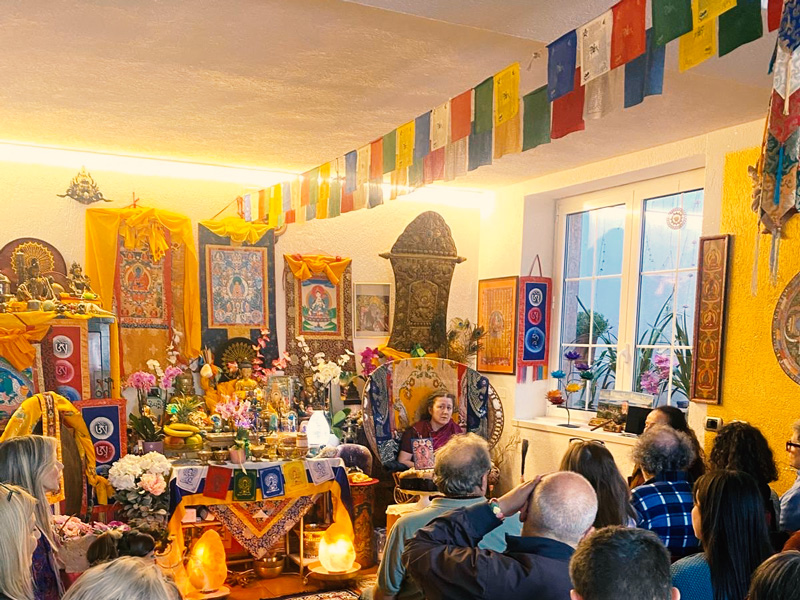
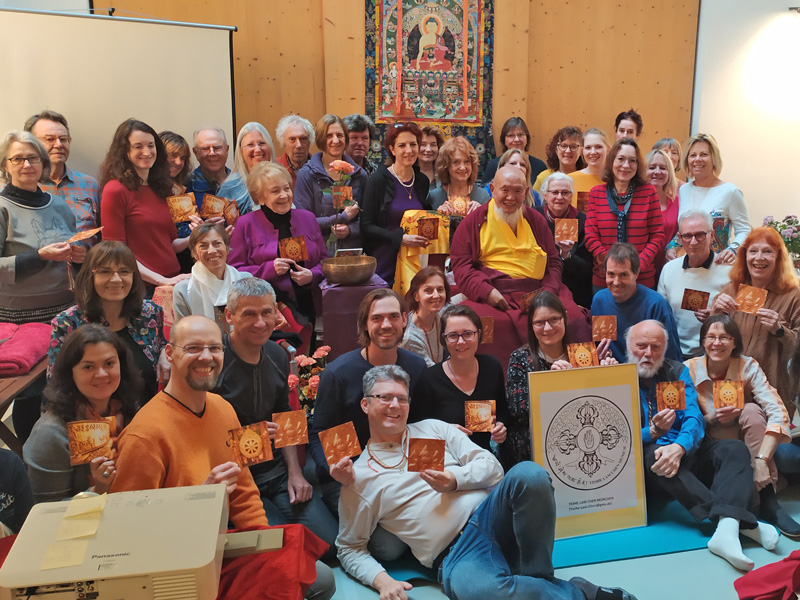
She continues: “Each centre is unique in terms of culture, environment, location, climate, and so on. Each one is like a garden where Lama Gangchen planted seeds, and the people involved in these centres are the gardeners of peace. It is wonderful to see how each group tends to its own garden to the best of its ability.”
Getting to the heart of the matter: why do Dharma centres exist? “In a Dharma centre, we do not seek worldly success; we are not concerned with how many people attend, how much money we have, or how famous we are. Success is measured by the positive change in people, by their inner transformation.”
She concludes with a piece of advice: “Many people want to establish new centres, but for now, it is better to focus on those that already exist. I recommend forming a study group affiliated with one of the nearest centres. Apart from that, there are numerous online resources available for times when physically visiting a centre isn’t possible.”
For those who wish to learn more, there is a page on our website with a list of NgalSo centres. We hope that everyone can help one another walk the path together and bring about the “inner transformation” that Lama Caroline spoke to us about.
If you are reading this news, you are part of this story. Your curiosity, your friendship, and your support help keep this place alive.