Contents
The Colonia, Albagnano’s “Little India,” between memories and project
The Italian Buddhist Union and the 8×1000 from your income tax, an important support for our Centre
Online teachings: Dharma at your fingertips
The Colonia, Albagnano's "Little India," between memories and project
In the November edition, we shared a bit of the history of the structure known to all of us as the “Colonia.” In mid-January, work began on the building, located in Albagnano, which will see it completely renovated to create twenty-two rooms to accommodate visitors to the Centre.
We interviewed Lama Caroline, who lived there for several years, and Franco Ceccarelli, who has invested time and energy in the project and will oversee the renovations, to better understand the building’s transition from a place of welcome for karma yoga practitioners to a guesthouse.
Lama Caroline tells us: “When the Colonia was donated to Lama Gangchen, we were very happy because at the time we didn’t have a gompa (prayer hall) and so the Colonia was used for retreats and summer teachings. For example, it was there that Lama Gangchen gave his first teachings on the Guhyasamajah and Vajrayogini tantras. The Colonia was also home to karma yoga practitioners – people who wanted to practice Dharma and help Lama Gangchen but didn’t have their own living space. It was a precious place for the community, who met there, spent time together, and celebrated events like birthdays, weddings, and the New Year.”
We asked her about her fondest memory: “I had my office there, and I remember Lama Gangchen always going around to greet everyone personally, checking in on everyone, taking care of everyone especially those who were sick or stopping for tea with someone. It was just like a family.”
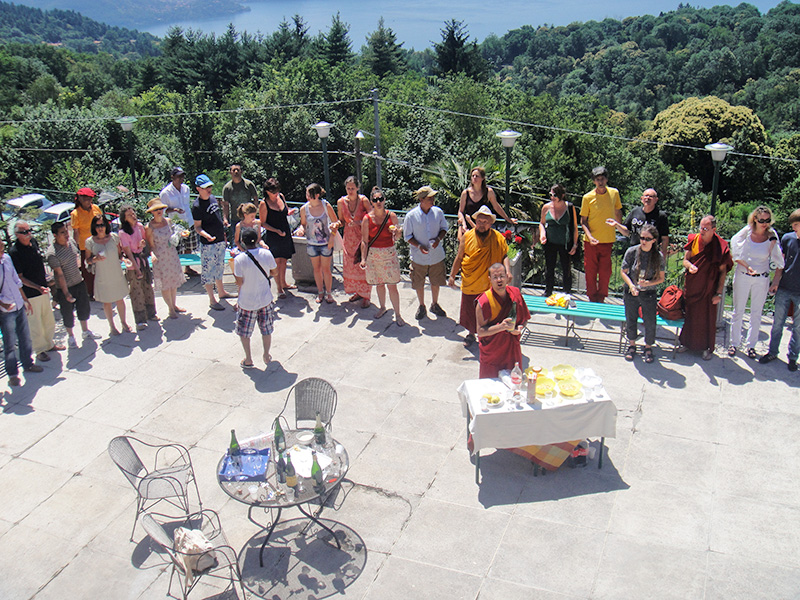
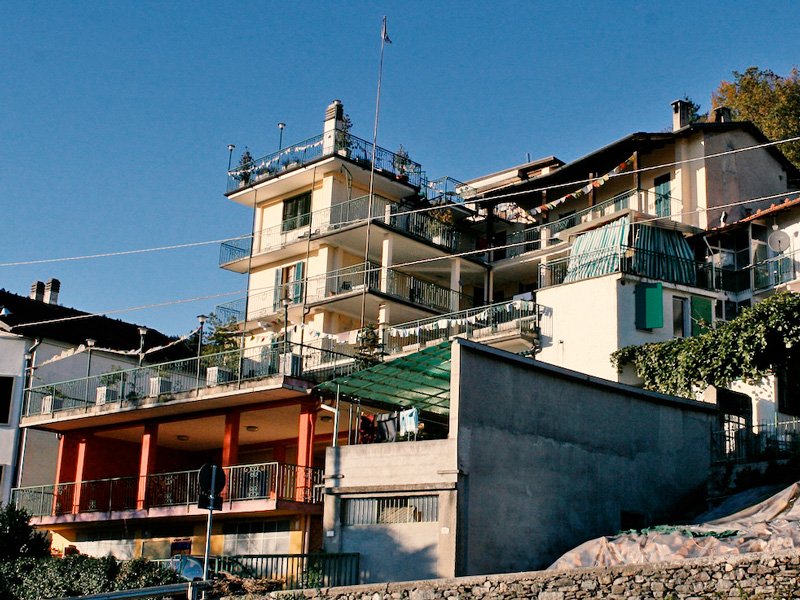
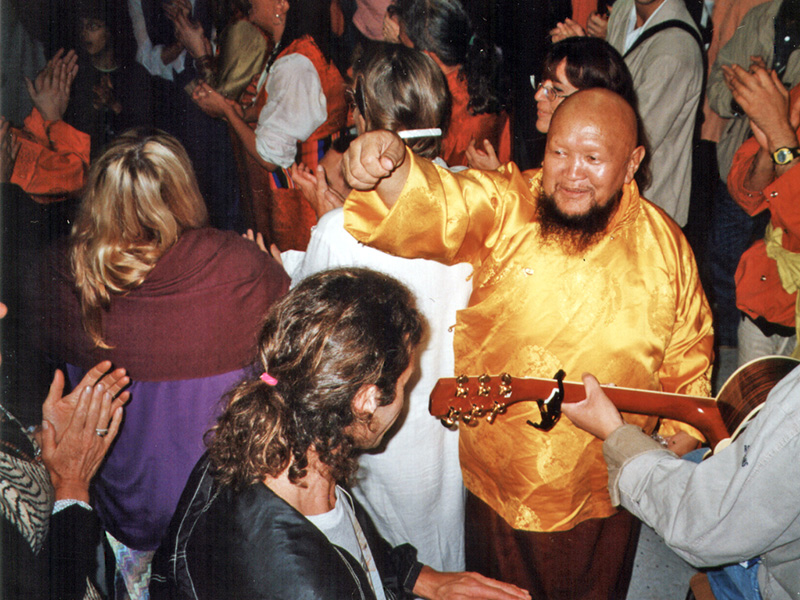
As we continue our conversation, we discover a curious fact: “Lama Gangchen gave the Colonia the name Tashi Gomang – the many auspicious doors – because so many people and friends stayed there on their first visit to Albagnano. For many, the Colonia was truly a gateway to Dharma and the decision to do something good with their lives. However, Rinpoche also gave it a second name: Little India. He called it that because he said: Westerners like to go to India and Nepal because they feel free. Here, too, we need a space where everyone can feel free. Indeed, there were people there who played instruments, had parties and so on.”
We asked her opinion on the change of use of the building: “The Colonia will become a guesthouse because people who come here are looking for somewhere to stay, and we don’t have enough space to accommodate them. However, we also need a community space where we can celebrate together and live as a family, because for many, moving to Albagnano is a lifestyle choice. The restaurant in the Centre isn’t suitable for this type of activity because it’s not a private space, and many people don’t have the money to rent other spaces for collective celebrations.”
We thank Lama Caroline for reminding us of the importance of moments and places where we can celebrate together as a family. Hospitality for those who come from outside is important, as is caring for the needs of the community.
The building – as we mentioned – is undergoing a major renovation after more than three years of waiting since the project was submitted. We talked with Franco Ceccarelli, who told us about the challenges and successes of this process: “The wait was long due to bureaucracy and endless discussions over technical details like the positioning of the elevator. Since the Colonia is located in the historic centre of Albagnano, we also had to go through the ‘landscape commission’, which lengthened the process. It took 12 years to obtain the building permit for the Temple, so we were definitely luckier with the Colonia!”
We ask him what the costs of this work will be and how they will be funded: “It’s a project costing €1.4 million. We’re confident we’ll be able to cover 30% of the costs, while we’ve taken out a loan for the remainder, which will be repaid with the proceeds of the future guesthouse. Fabrizio and Daniela Dido, who also worked with us on the Temple, will be supervising the project. The renovation is expected to take 14-18 months.”
We asked Franco what the renovation entails: “There are plans for 22 rooms with private bathrooms and a common area. There will also be two rooms for Lama Caroline, who originally had her office there. The Colonia will change its use, but its beauty will remain. For us, it was a place for volunteers and parties, there are so many fond memories. We’re trying to make the common area more spacious because Lama Michel’s idea is that groups who book with us can also hold courses and activities there.”
While we wait for the project to be completed, we wish the directors, the contractors and all the workers involved in this major renovation project every success. We hope it will remain a space where all guests can feel free and truly themselves.
The Italian Buddhist Union (UBI) and the 8x1000 from your income tax, an important support for our Centre
Everyone who files their tax return in Italy has undoubtedly heard of the 8×1000, but perhaps few know how important the contribution from this fund is for Dharma centres like ours.
Following an agreement with the Italian government, since January 2013, the Italian Buddhist Union has received contributions from Italian citizens who choose it as their 8×1000 recipient. With the contributions received, UBI supports its 71 member centres with funding for their worship and finances humanitarian and social projects.
Managing and allocating funds is not a simple process. It requires careful reporting as well as specific documentation. At Kunpen Lama Gangchen, two people work voluntarily to collect and submit to UBI the documentation required to obtain the funds: Cinzia Tumiotto and Ettore Pozzi. We spoke with both of them to learn more about their work.
Cinzia begins with a general overview: “UBI calls for proposals are issued externally with a humanitarian purpose, and internally – that is, with associated centres – with calls for support for operating costs, aimed at reimbursing the costs of Dharma activities. When it comes to calls for proposals related to operating costs, it is essential to verify that the documentation complies with the guidelines provided by UBI.”
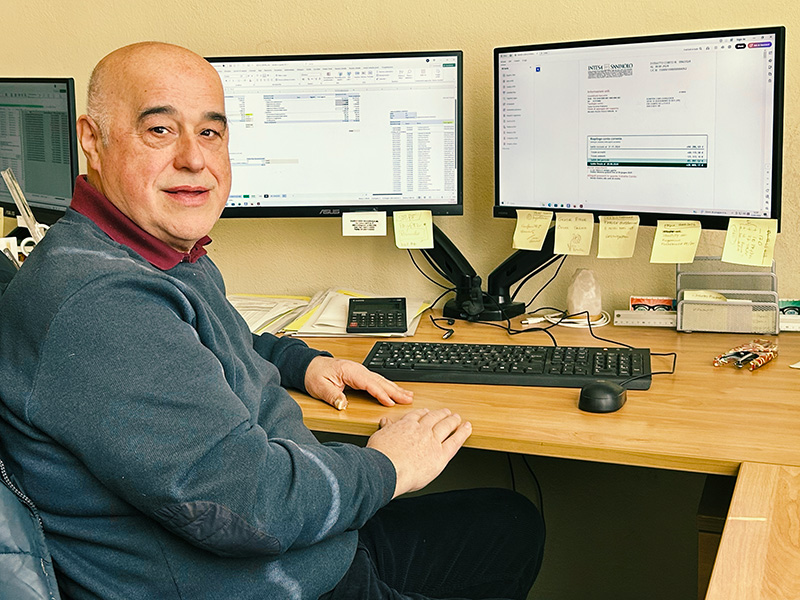
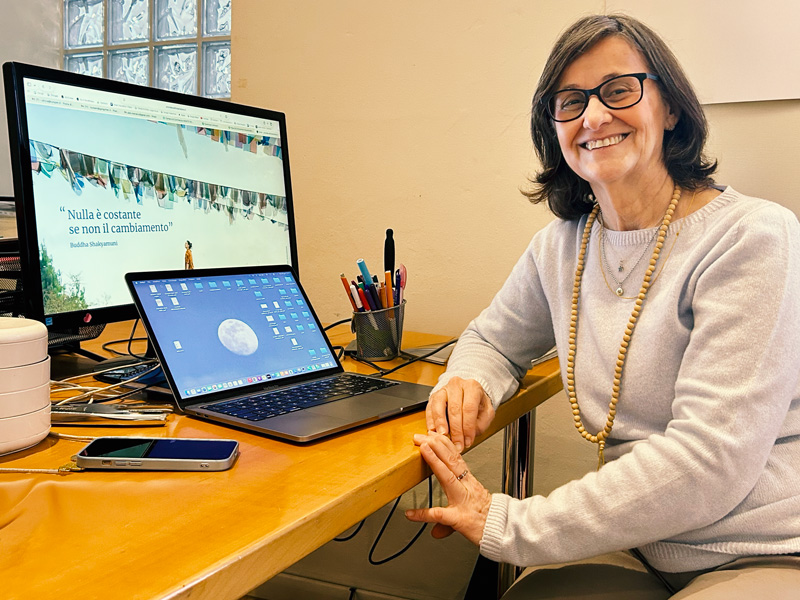
We asked her to tell us exactly what she does: “My job is to select the expenses eligible for reimbursement, focusing on those directly related to worship activities, such as utilities, maintenance of the buildings dedicated to worship, and the compensation of those who provide their services to the Centre. Expenses not related to Dharma, such as the commercial side of things like the shop and guesthouse, are excluded. Ultimately, only costs strictly related to Dharma are entered into the platform. It’s a demanding job, taking about three months, given the Centre’s large number of activities.”
At this point, Cinzia reveals an interesting aspect: “The unique feature of Kunpen Lama Gangchen is that it doesn’t use the entire 8×1000 funds it receives to cover operating expenses, but rather as investments in new projects. For example, in the past, we redirected funds to the construction costs of the Temple.”
Cinzia concludes: “In this work, I feel a responsibility to the Italian citizens who have chosen UBI as the recipient of the 8×1000. Thanks to these contributions, in recent years, UBI has been able to fund numerous humanitarian projects both nationally and internationally, and the number of people choosing UBI continues to grow. UBI supports not only social initiatives, but also animal and environmental protection projects, areas for which it is particularly appreciated. A concrete example is the Verbania stable for retired Carabinieri horses: thanks to this initiative, horses destined for slaughter have found a new life, and an educational and therapeutic space has been created for children and young people.
With Ettore, we delve even deeper into the technical details: “The call for funding foresees the reimbursement of 70% of ordinary institutional running costs. Since we have significant institutional and commercial activities as an association, the first step is to distinguish between the two categories of expenses. Institutional expenses, in turn, are divided into two broad categories: invoiced expenses and reported but uninvoiced expenses, such as mortgages, insurance and bank charges. Cinzia is responsible for scanning the invoices (we’re talking about more than 1,000 documents!), assigning them a name, and uploading them online. I then verify whether the invoices have already been paid and how.”
We ask Ettore how he began his involvement with Kunpen Lama Gangchen: “It was 2018. After a trip to Kathmandu, Lama Michel asked me to help scan invoices, and shortly thereafter I was included in the accounting team. For operating expenses, I created an application in Visual Basic that saves a lot of time, even though there are more well-known alternatives today.”
He concludes the interview with a reflection: “Having good accounting is important. Today, UBI requires financial statements prepared according to certain principles and frameworks. The 8×1000 is very sensitive, so they are increasingly subject to scrutiny. UBI’s demands are ultimately changing our own accounting practices as well: we are no longer a standalone association, but have become part of a larger family.”
Online teachings: Dharma at your fingertips
Lama Michel Rinpoche often tells the story of a teacher who said, “In the past, you had to walk for days or weeks to listen to Dharma teachings. Today, you have the opportunity to have a teacher come to your home whenever you want, interrupting him whenever you don’t understand and having him repeat it.” He was referring to the invaluable opportunity to listen to teachings online, a benefit we often take for granted, but which is not necessarily the case.
Lama Gangchen Rinpoche was a pioneer in using new technologies to spread Dharma: from audio cassettes to compact discs to VHS tapes. Lama Michel has taken this one step further with YouTube streaming – which has improved in quality and organisation over the years – with an advanced multilingual translation system set up in our Temple.
In recent years, Kunpen Lama Gangchen has invested and is still investing energy, technology, and funds to expand and diversify the ways in which it reaches people remotely. Lama Michel Rinpoche’s decision to close social media to protect people’s mental health dates back to 2023. Since then, investment has focused primarily on developing YouTube channels and creating podcasts. Many people are working, even remotely, to make this possible. We listened to the testimonies of two of them: Rocio Blanco Rubio and Carminha Villaverde Daguer.
Rocio tells us about the efforts the team dedicated to this area has made and is making: “Behind every online teaching is a great deal of work: preparing the programme before streaming – including the cover image – and then titling it, dividing it into chapters, and adding a description. It’s a long process that many people aren’t aware of.” She continues: “Lama Michel Rinpoche began broadcasting teachings and ceremonies online in 2013. For many years we had a single YouTube channel in various languages (Italian, English and later Portuguese and Spanish). Over the past two years, we’ve focused on dividing the channels by language: we’ve taken more than 3,000 videos and separated the languages. A lot of effort has also been put into organising the materials into playlists. We’ve now launched podcasts in three languages—Italian, English and Portuguese—transforming the “Wednesday at Kunpen” and “Morning Inspirations” videos into audio tracks that can be listened to on various platforms.”
Among the new features for 2025 is a Tibetan-language YouTube channel: “It’s primarily a study channel. Here, we publish all the teachings given by the great masters of our lineage that Lama Michel has recorded over the years. From a very young age, he recorded everything he could on tape. This material was later digitised, and now we’ve made it available to everyone.”
We ask her about future plans in this area: “We plan to organise all of Lama Gangchen Rinpoche’s videos so that people who haven’t met him can connect with him. We also want to continue offering everything we do free of charge. It’s about maintaining a pure motivation, not forgetting that our channels are there to offer, not to gain followers. We hope that people, understanding the importance of this, will continue to support us.”
Carminha began working in this department in 2021 and has been actively involved in the long process of developing the streaming service and YouTube channels:
“My commitment involves managing the YouTube channels, streaming, and technical equipment such as cables and cameras, with the aim of maintaining high filming quality. I also manage video content creation.”
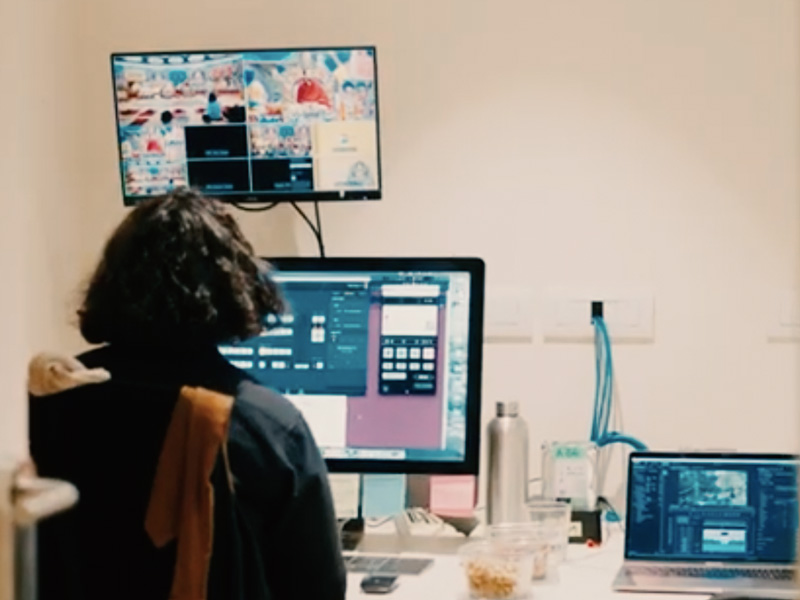
We asked her about the progress made in recent years: “Rocio has created a protocol to follow: since we generate so much content, a clear procedure for archiving and organising the materials is necessary. For example, we can’t store all of Lama Michel’s meditations because the online space needs to be managed efficiently.”
The innovations introduced over the past year are significant: “With YouTube, you can now subscribe and support the channel with a membership. Before, many people wondered why our channel had ads. YouTube only allows you to broadcast without ads when you have at least 4,000 hours of viewing and 1,000 subscribers. Now it is also possible for us to broadcast on the English channel without ads. YouTube is a rapidly developing platform and also allows for new features like linking to study texts and sadhanas for meditation practices.”
Lama Gangchen Rinpoche himself plays a key role in content creation: “We have a valuable archive of video materials created by people who have travelled with him. Creating content based on these videos is also a way to honour those who filmed them. Thanks to these materials, we created the series “NgalSo Path to Enlightenment,” “Treasury of Memories,” and “Wisdom Oracle.”
Managing the channel has become a more demanding job over the years: “It’s now a separate role that will be handled by someone else in the future. You have to take care of subscribers, respond to everyone, and work on past videos, for example, dividing them into chapters. I will focus more on the technical side to ensure good broadcast quality, paying attention to the translators and checking for issues with the network, cables, etc. Yesterday, for example, I spent the whole day repairing cables with a soldering iron.”
Carminha concludes: “It’s important to maintain a healthy relationship with content creation because we are constantly bombarded with new features on platforms such as YouTube. Having a clear vision of how to manage content and collaborate with the channel’s growth, creating clear guidelines and procedures, is very important. It doesn’t take much, but you need to do it well. Sometimes growth gives you an adrenaline rush, but I wonder if we really want to live like that. It will be up to those who manage our communications to give clear directions, following Lama Michel’s guidelines.”
We thank everyone who has contributed to the development of the YouTube channels and podcasts over the years, those who are still committed to improving this sector, and all those who support it with their donations.
Pilgrimages to Asia during the Tibetan New Year
The month of February is traditionally a month of travel for the NgalSo sangha. Every year, Lama Gangchen Rinpoche, accompanied by a group of disciples and friends, travelled throughout Asia during this period, visiting various countries including Indonesia, Thailand and India, finally stopping in Kathmandu, Nepal, to celebrate Losar, the Tibetan New Year.
This year, two pilgrimages were organised: one to the Kathmandu Valley, led by Francesco Prevosti, and one to India, led by Lama Michel Rinpoche.
The Kathmandu Valley offers a wealth of sacred sites concentrated in a relatively small area. The Hindu and Buddhist tantric traditions have been preserved here, protected from the political changes that have swept the Indian subcontinent over the centuries. The caves of the pre-Himalayan regions have also been chosen by yogis and meditators for intense retreats and practices. This area—despite the massive urbanisation of recent decades—remains blessed by the presence of powerful sacred sites that remain a destination of pilgrimage and an object of devotion for both locals and foreign visitors.
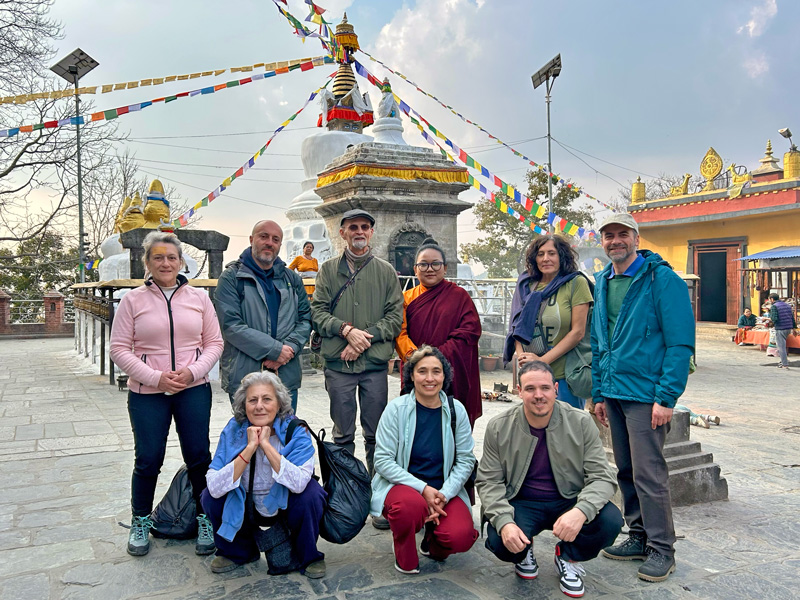
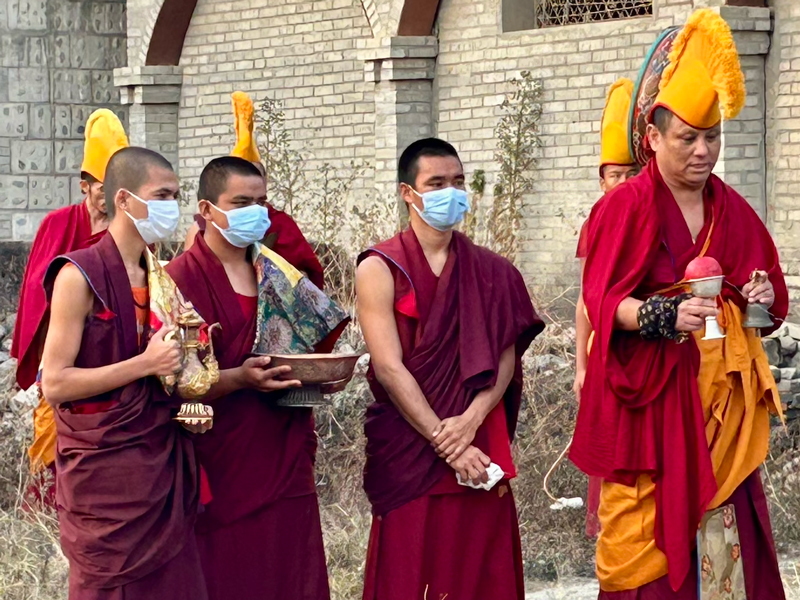
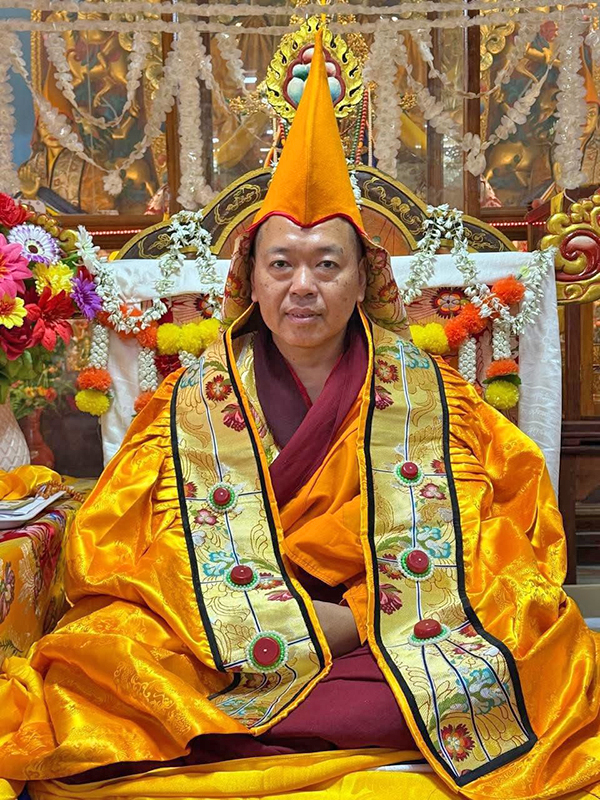
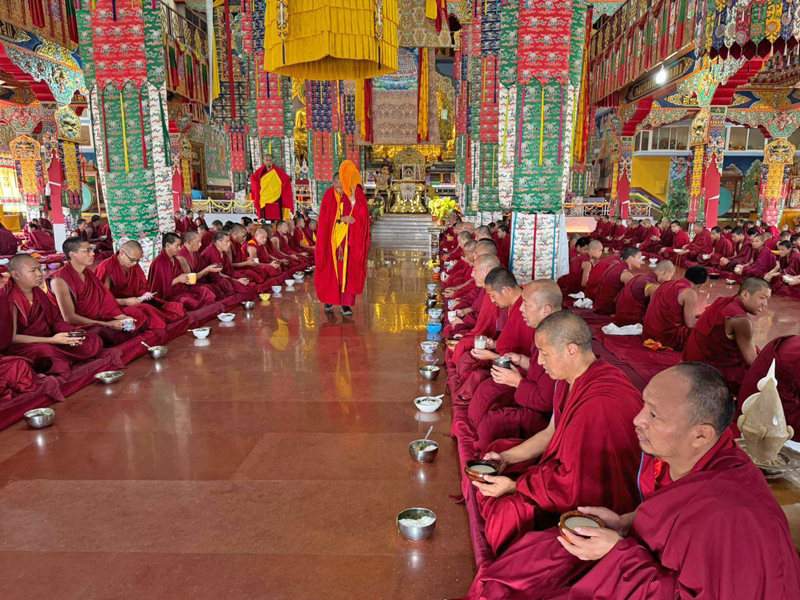
A group of about 10 people—the number varying depending on the day—visited and prayed at the stupas of Boudha and Swayambhu, the Vajrayogini temples in Sankhu, Bijeshwori, Pharping and Patan, the sacred sites of Namobuddha, Pharping, Patan, Bhaktapur and Godawari. They also visited Sed Gyued and Phelgyeling monasteries and Gangchen Samling School, where numerous children are supported through the long-distance adoptions and the humanitarian aid projects of the Fondazione Lama Gangchen Help in Action. Between February 16th and 18th, they participated in the pujas celebrating Losar, the Tibetan New Year, and received blessings from His Holiness Phabongka Rinpoche.
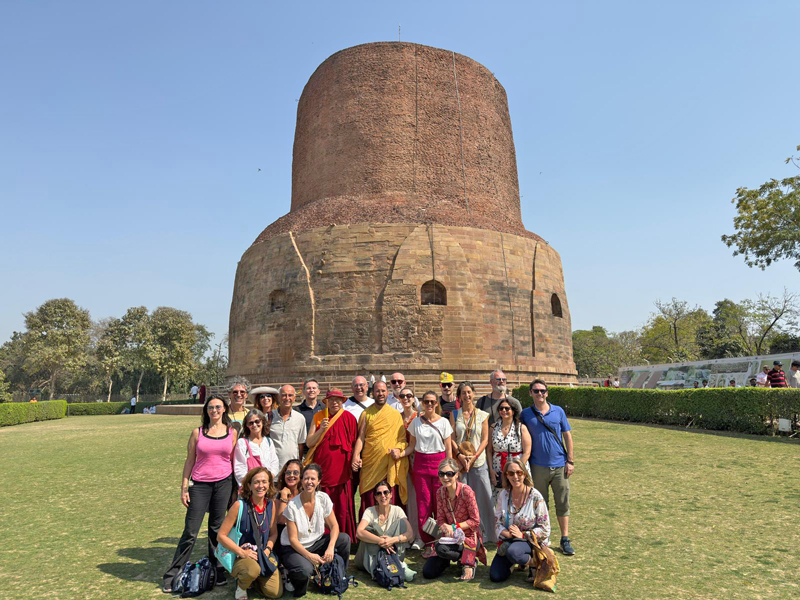
The group headed to India, departed on Losar Day after a celebration at the Albagnano Temple. Their first stop, guided by Lama Michel Rinpoche, was to the majestic Ajanta and Ellora caves near Mumbai. Today, these caves have become a simple tourist attraction for many, but for the travelling sangha they were a special place to pause for meditation and to pray together, surrounded by splendid architecture and rock carvings of Buddha. Next, the group travelled to the state of Karnataka to participate in the enthronement ceremony of H.E. Sherab Rinpoche as abbot of Shar Ganden Monastery. Afterwards, they also visited Serpom Monastery and Kundeling Rinpoche’s Monastery, and finally, due to a change of plans caused by the conflict in the Middle East, they visited the sacred city of Sarnath, also known as the “Deer Park.” Here Lama Michel gave teachings on the four noble truths and refuge at the same place and on the same day that Buddha Shakyamuni gave these teachings 2,570 years ago.
Although travel has become increasingly complicated since the pandemic, both due to high costs and the rise of regional conflicts, pilgrimages to the sacred sites that are the origins of Buddhist worship remain a precious opportunity for the sangha and all practitioners to draw spiritual energy and share experiences with their fellow pilgrims.
The tsog marathon: 7 million goal by Rinpoche's parinirvana
A special tsog marathon has begun! As requested by Lama Gangchen, since September 11 2001, the Guru Puja has been celebrated daily at the Albagnano Temple, offering tsog dedicated to inner and world peace. During the celebration, the number of ganachakra recited, or malas completed with 108 repetitions, is counted. Lama Michel Rinpoche has asked for 7 million repetitions to be completed by April 18, the anniversary of Lama Gangchen Rinpoche’s parinirvana.
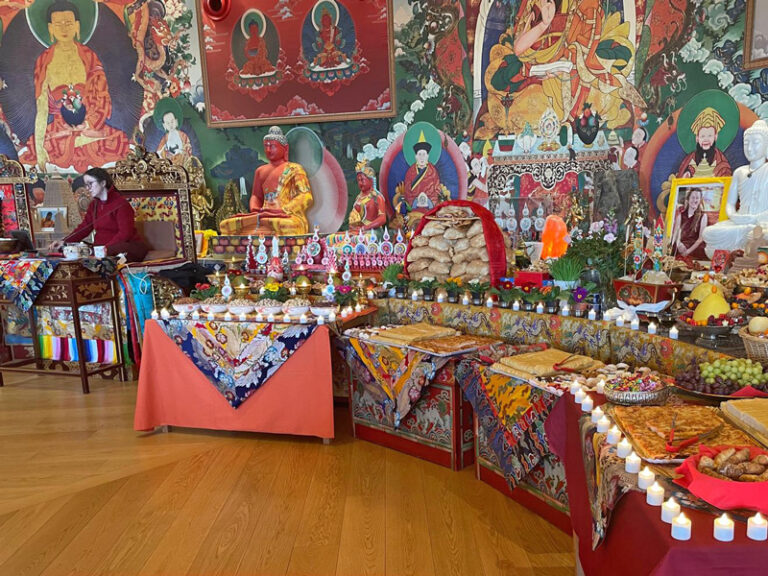
A few days of collective chanting have already been organised, and more will follow (you can stay informed via our WhatsApp channel). The ganachakra—also known as the tsog offering—was originally a festive assembly of tantric practitioners (sangha) in which they chanted mantras, danced, and made offerings of incense, light, and food to the masters, holy beings, all those present, and ultimately to all beings in the six realms of existence. In our tradition, the ganachakra has been included in the Guru Puja, celebrated daily at the Albagnano Temple for 25 years.
Join the tsog marathon! During the Guru Puja, you can register the number of ganachakra malas recited during the livestream on YouTube. They will be added to those accumulated to date. Even a single mala can make a difference!