Summary
Protecting the elements with cleaner energy
Healing the elements is one of the foundations of the NgalSo practices taught by Lama Gangchen Rinpoche. In the Self-Healing for the Environment sadhana, the emphasis is on the purification and healing of the internal and external elements: wind, fire, earth, water, and space. The Albagnano Centre is committed to respecting the five elements through concrete initiatives, considering the environment part of us and us part of the environment.
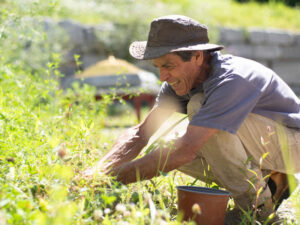
We interviewed Steve Fontaine, who is responsible for the facilities and maintenance of our Centre, to find out how respect for the five elements is applied in the field of energy. Steve tells us that, step by step, we are creating an integrated system in which solar and geothermal energy – with the help of non-renewable sources such as gas and wood – work together to provide what we need. At present, however, the Centre is not yet able to obtain all its energy from renewable sources and faces a number of challenges.
One of these concerns was the excess energy produced by photovoltaic panels. While production and consumption are equal in winter, in summer production significantly exceeds needs, and so part of the energy could not be used. The solution was to purchase storage batteries to harness the excess energy during the night. Steve explains that, although the Temple is powered by geothermal energy, it needs electricity to operate the pumps that circulate the liquid responsible for the heating and cooling. Hence the importance of having an efficient photovoltaic system to support these needs.
As for the Centre building, which houses all the services (offices, canteen, bar, shop and bed&breakfast), heating is provided partly by a wood-fired boiler, which preheats the water, and partly by a gas boiler. For many years, there has also been a system of pipes on the roof that preheat the water, thus reducing the workload of the gas boiler. These preheating systems help to reduce consumption by drawing on solar energy and wood. However, supplying wood requires time and care for our forests. Forests must be kept clean and clear of fallen trees after severe weather events, a job that cannot always be done by volunteers and requires specialised personnel.
Finally, Steve addressed the topic of water. He explains that the precious spring discovered during excavations behind the Temple, thanks to a system of pipes, pumps, and cisterns, will provide us with enough water to irrigate the gardens and supply all the buildings with both drinking water and wastewater. This water is also connected to the fire-fighting system, which has recently been tested. Two cisterns have already been buried, and three more are to be buried behind the Labrang.
Energy self-sufficiency, through the use of renewable or surplus sources such as wood, is an important step for our Centre, especially because it allows us to demonstrate in a concrete way our care for the five elements and to use what nature offers us with generosity and abundance.
Our deepest gratitude goes to all those who have generously supported these initiatives. Special thanks go in particular to the Italian Buddhist Union, along with the Lama Gangchen Inner and World Peace Foundation (Van Dam-Kuijper Fund), the Lama Gangchen International Global Peace Foundation, the Mani Bhadra Lama Gangchen Wise Projects Foundation, and Immobiliare Marco Polo, owned by Franco Ceccarelli and Tseten Gyurme.
In carrying out the projects related to geothermal energy, the photovoltaic system, the water collection tanks, and the fire protection system, the support of the Italian Buddhist Union was also essential, as it contributed significantly to bringing these projects to fruition.
The origins of the Albagnano Centre: the history of the Colonia
In the stories of Lama Gangchen Rinpoche’s disciples, the Colonia — renamed by Rinpoche as Gangchen Tashi Gomang or the many auspicious doors of Gangchen — has always held a special place. It is a five-story building in Albagnano overlooking Lake Maggiore that traditionally hosted children and young people who came from city parishes to spend time in a cool and healthy environment. From 1999 onwards, it began hosting Kunpen Lama Gangchen volunteers and other visitors to the Centre, which was then in its infancy.
Purchased in 2002 thanks to a donation from Felix Chen, a Taiwanese friend of Rinpoche, it was for years the venue — not only for short and long-term stays — but also for teachings, conferences and memorable celebrations. Isthar Adler recounts the various conferences dedicated to traditional healing that she personally organised and of which she has numerous photographic records. Her wedding was also celebrated there, and in 2003 Lama Gangchen gave the first teachings in Albaganano on the NgalSo practice of Vajrayogini, which Lama Caroline now helps to keep alive.
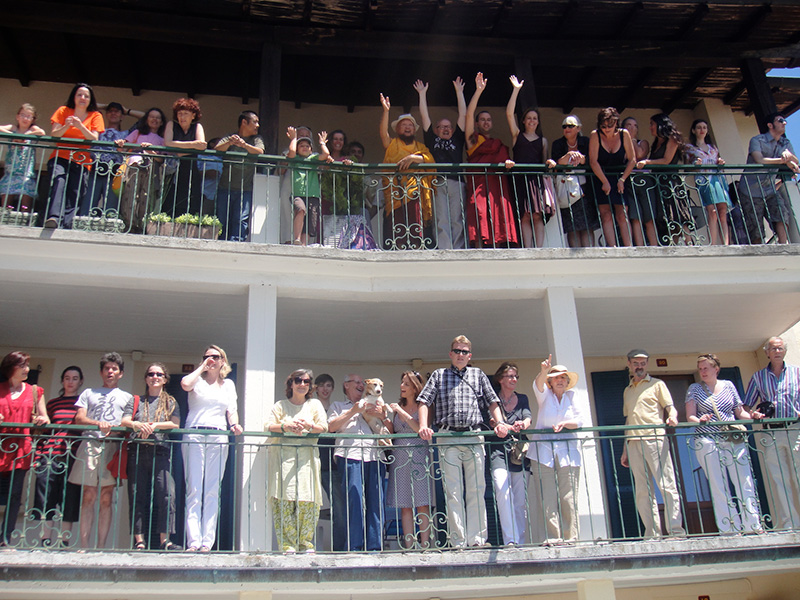
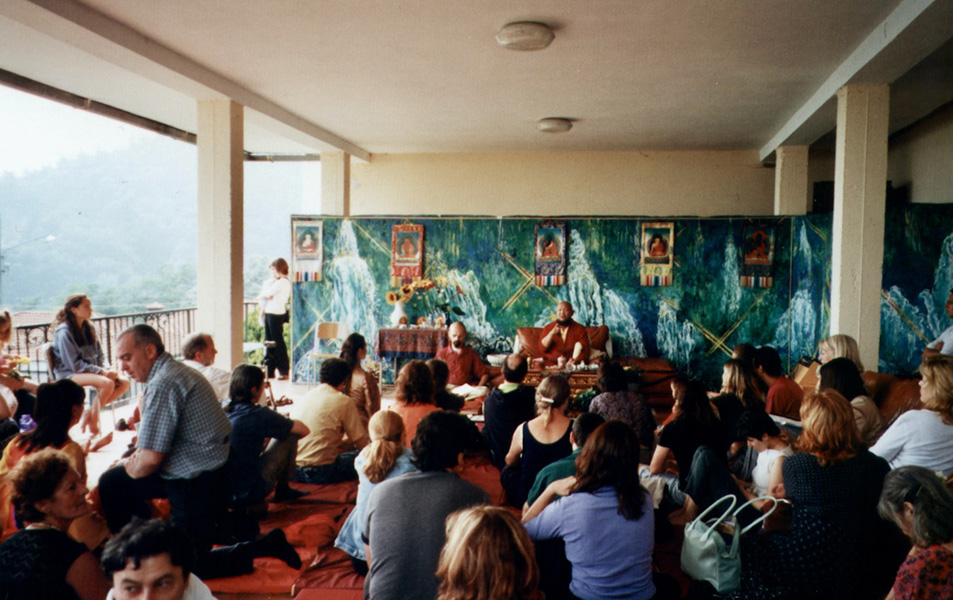
Jan de Ruiter, who coordinated the Centre at the time, remembers in great detail how the interior spaces were organised: rooms for volunteers and guests, a laundry, storage room, kitchen, and so on. On the top floor, there was an attic that could accommodate up to 16 beds. Jan explains that the structure was rather outdated, which meant that energy consumption was very high. In addition, the water pipes were old, and the use of the water for drinking or cooking was not recommended. Nevertheless, the building was a blessing at a time when other spaces were not usable, and everyone who lived there was delighted with the wonderful lake view and the large terraces. Meanwhile, the main building of the Centre was brought up to standard and then became the centre for all services.
The Colonia was also a refuge for those who, often arriving in Albagnano from abroad or other cities, had nowhere to live. Carlotta Segre, for example, speaks of the Colonia as a place close to her heart: it was her first residence in Albagnano and it was here she celebrated her 40th birthday together with the whole community, with music by Ilaria Ceccarelli and a buffet prepared by Roberto Mori.
Subsequently, it became the residence of long-term volunteers before finally closing in 2020 when safety and accessibility could no longer be guaranteed. Many friends in our Sangha, including Lama Caroline, have fond memories of one of the places that marked the origins of the Albagnano Centre.
Since its closure, Lama Michel Rinpoche — together with Franco Ceccarelli – with technical support from architects and engineers – has been working on a general renovation project which, after three years of waiting, has finally received official approval from the municipality to proceed. In light of this wonderful news, we have begun to revisit memories of the events and life of the Colonia, and we will continue to do so in the next edition of “Good News”.
The Shar Ganden monks in Albagnano
For several months now, five monks from Shar Ganden Monastery, located in the state of Karnataka, South India, have been staying at our Centre. They join the long-standing presence of Ven. Tenzin, Geshe Lobsang Puntsok, his attendant Geshe Migmar and Chonze Tara.
Their presence is an important sign for our Centre: it helps cultivate relationships with our lineage monasteries in Asia, enriches the spiritual practices in our Albagnano Temple, increases the blessing energy, and strengthens the bonds between Western and Eastern Buddhism.
This is not the first time that monks have stayed for an extended period in our Centre. Lama Gangchen Rinpoche often invited lamas, geshes and monks to stay in Italy. This was complemented by frequent trips to Asia with Western friends and disciples. Rinpoche strongly wished to show the East how much the Dharma was appreciated and how alive the practices were in the West. It was precisely because of this effort to promote cultural exchange and bring distant worlds together that Lama Gangchen was known as ‘Lama Marco Polo’.
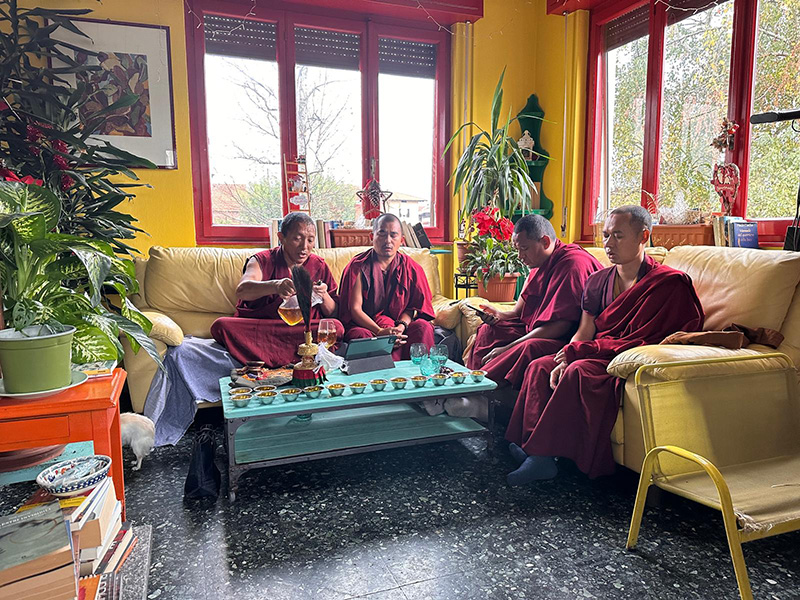
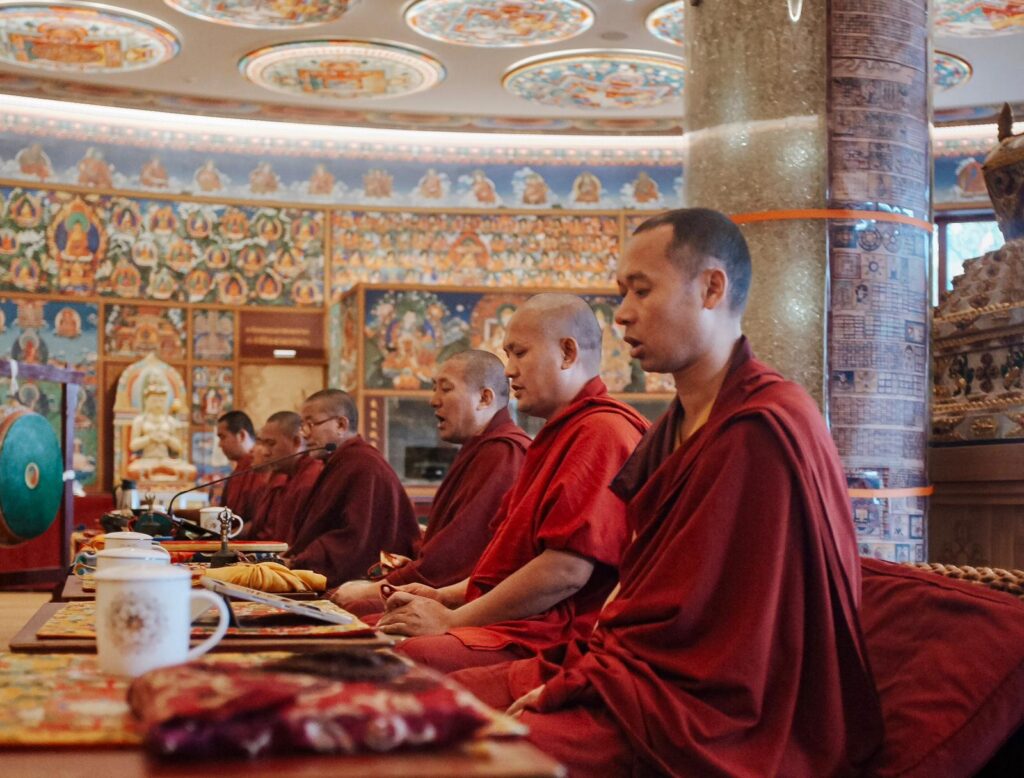
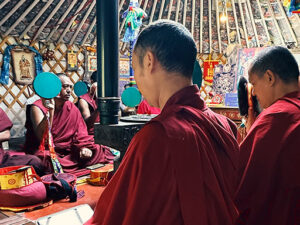
The presence of the Shar Ganden monks in Albagnano is a special opportunity to continue this exchange between worlds and cultures, to learn new things about religious practices and to perform special ceremonies such as Rabne Chenmo and the Yamantaka sand mandala. In addition, thanks to them, we now have the possibility to request a personal puja, at the Temple or at home: the monks select the most appropriate puja based on the request and prepare everything necessary to perform it. To date, 98 pujas have been conducted.
Michela Ciniltani, the Temple coordinator, says that thanks to them, she has discovered a different way of approaching things: “I have learned many small details about the rituals and formalities during religious ceremonies, but above all, a different perspective: they are never in a hurry or afraid of making mistakes. They always put me at ease and tell me to take my time. And if there is a slight delay, it’s no big deal”. This summer, when necessary, the monks even offered to cook and serve meals at the buffet, surprising the community and guests.
Recently, to inform the Sangha about their background, the monks distributed flyers. Since all the offerings collected go to support their monastery’s educational projects, they felt it important to illustrate them by offering some relevant information.
Another way to support the monastic community are the special pujas celebrated in their monasteries. To this end, we have posted a list of pujas that will be conducted throughout the year on the “Prayer Requests” page of our website, along with information on how to support them with an offering, including the option of making a dedication.
The Sangha and spiritual journeys in Asia
During August and September of this year, important pilgrimages for the Sangha took place. Guided by our teachers, two groups visited sacred Buddhist sites and performed the NgalSo lineage practices in China, Mongolia and Tibet, before meeting in Nepal.
The meeting point for everyone was Chengdu in the Chinese province of Sichuan. Here, Lama Michel Rinpoche and the pilgrims prayed before the Leshan Giant Buddha, a 71-metre-high statue carved into the rock. Two days later, one group continued on to Mongolia and another to Tibet.
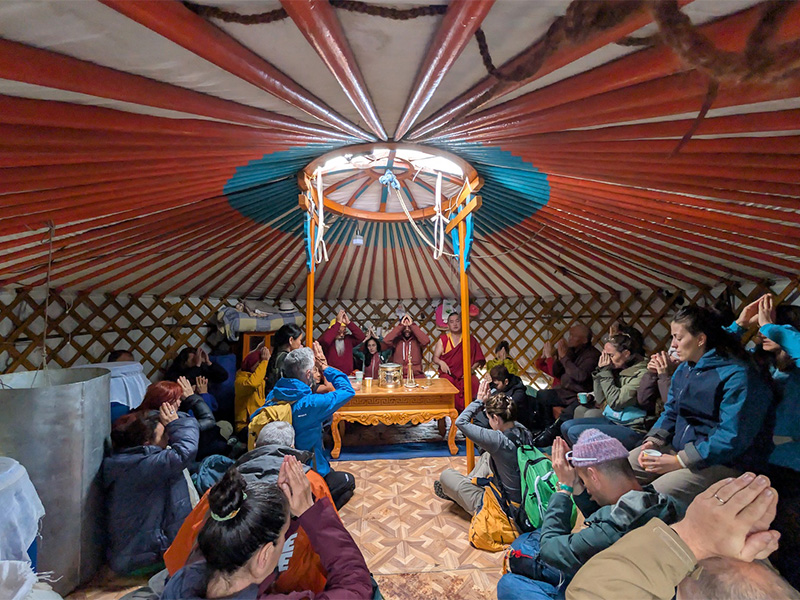
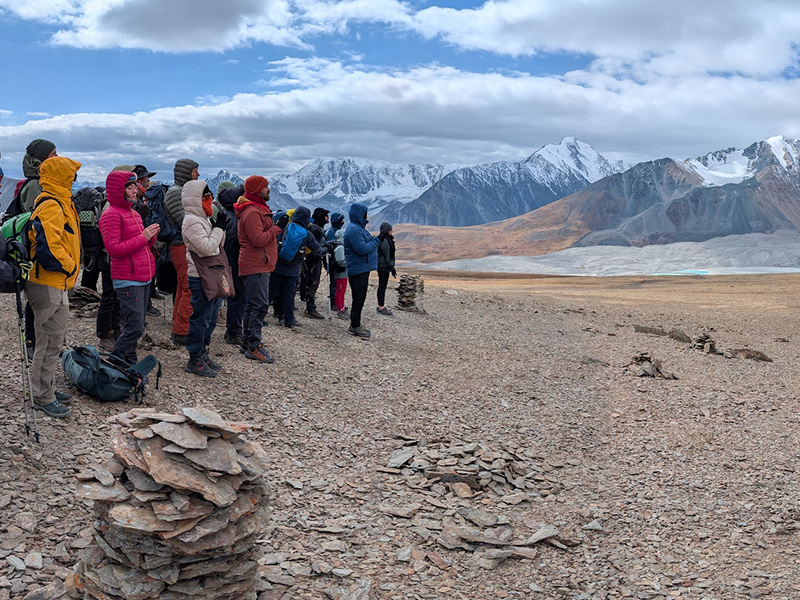
Mongolia surprised everyone with its magical atmosphere: participants recounted the beauty of finding themselves in front of boundless spaces, united by a feeling of spontaneous brotherhood. The large group, assisted by Tsempa, former attendant of Geshe Konchok Gyaltsen, Mongolian cooks and drivers, and led by Lama Michel Rinpoche and Geshe Konchok Gyaltsen, left the capital Ulaanbaatar to explore the immense Asian country.
The boundless spaces the group travelled through amplified feelings of freedom and peace. Everywhere there were free-roaming animals — yaks, horses, sheep and goats — under a sky of clouds that seemed to come out of thangkas (Tibetan paintings) and on meadows that smelled of artemisia and medicinal herbs. In the evening, traditional yurts (nomadic tents) provided shelter for the group, who gathered here to eat, sleep, chat and pray together.
A special highlight of the pilgrimage was the visit to the monastery of Zawa Tamdrin Rinpoche, who welcomed the group with great generosity together with his family. He led everyone in meditation and prayer among a group of rocky hills where an emanation of Tara stands. In the evening, he invited Mongolian artists to perform an unforgettable show.
Everyone felt that the Mongolian people were very welcoming and helpful. One example among many: the assistants, with great wisdom and calm, freed the buses that had sunk into the mud while conducting a relay to retrieve the participants and bring them to their destination.
Lama Michel Rinpoche offered valuable teachings and carefully explained the places visited. At the end of the trip, the group met the sisters of Burma, a friend of the Sangha who left her body last year after going through a long and painful illness with faith and courage.
A group then continued on to Mount Altai, where nature presented some challenges. A snowstorm hit the base camp where the group was staying, but the following day, bright sunshine revealed the magnificent snow-capped peaks and the horizon lost between clouds and ice.
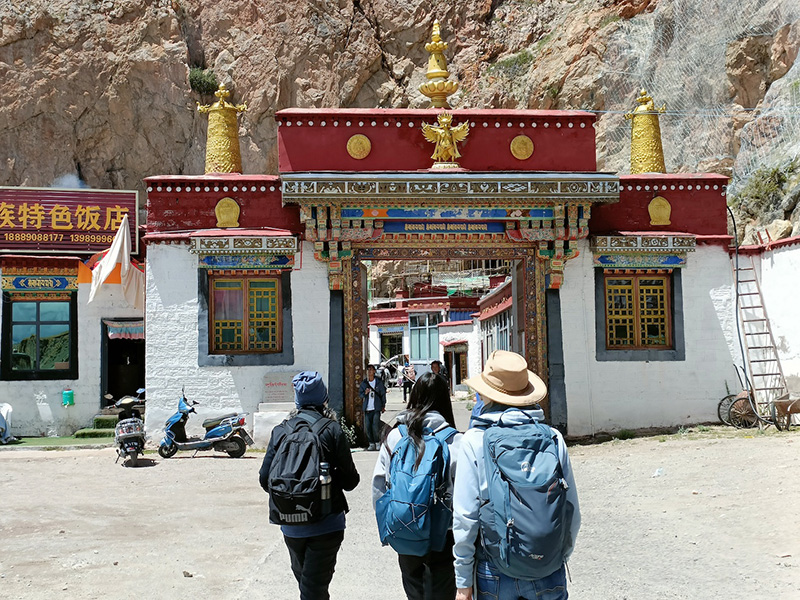
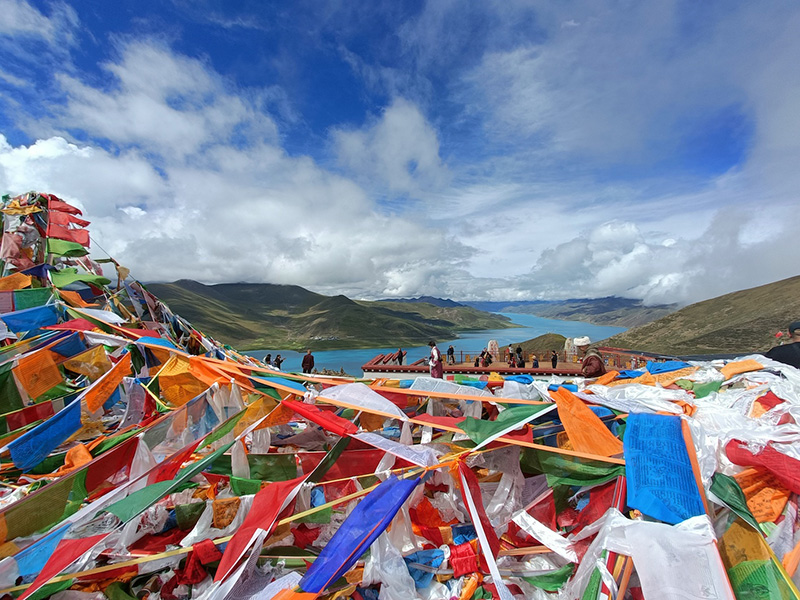
While the larger group travelled to Mongolia, a smaller group of about 20 people explored sacred Buddhist sites in Tibet. Once they arrived in Lhasa, the capital of the autonomous region, the group encountered grand celebrations marking 60 years of Chinese administration in the region, attended by the President of China and the Panchen Lama.
In Lhasa, the atmosphere became more intimate in the evening when the tourists left, leaving only practitioners to perform khora and prostrations. Here, the group spent five nights visiting the most important sites of Tibetan Buddhism — including Sera and Ganden monasteries — before continuing on to other destinations in central Tibet. Worthy of note was the visit to Tashi Lumpo Monastery, where Lama Michel Rinpoche studied and where there is a stupa dedicated to one of Lama Gangchen Rinpoche’s previous lives. Participants described feeling a truly powerful energy emanating from this and other sacred sites.
The group also visited monasteries of the Nyingma and Shakya traditions, and in some had the opportunity to share a meal with the monastic community. Particularly noteworthy was the visit to Namtso Lake, located at an altitude of 4,700 metres, the highest salt lake in the world, a land of nomads, surrounded by mountains, plains and clouds.
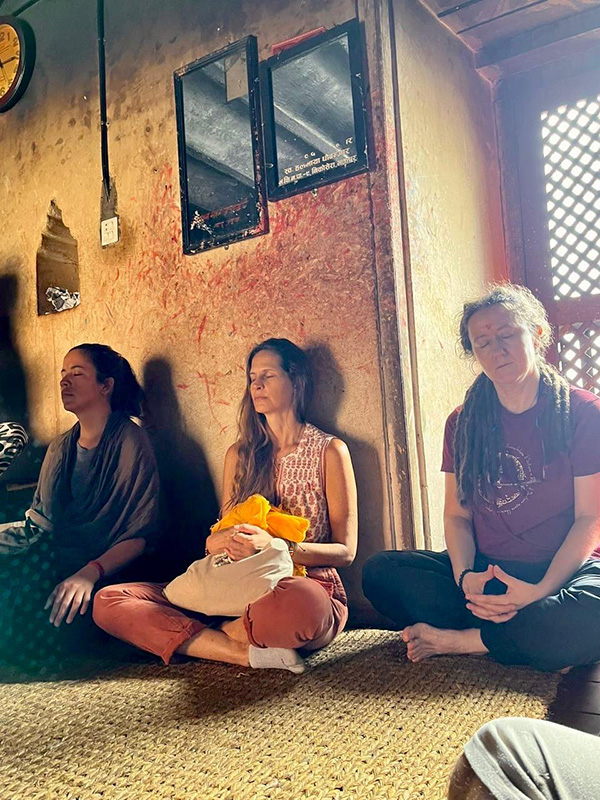
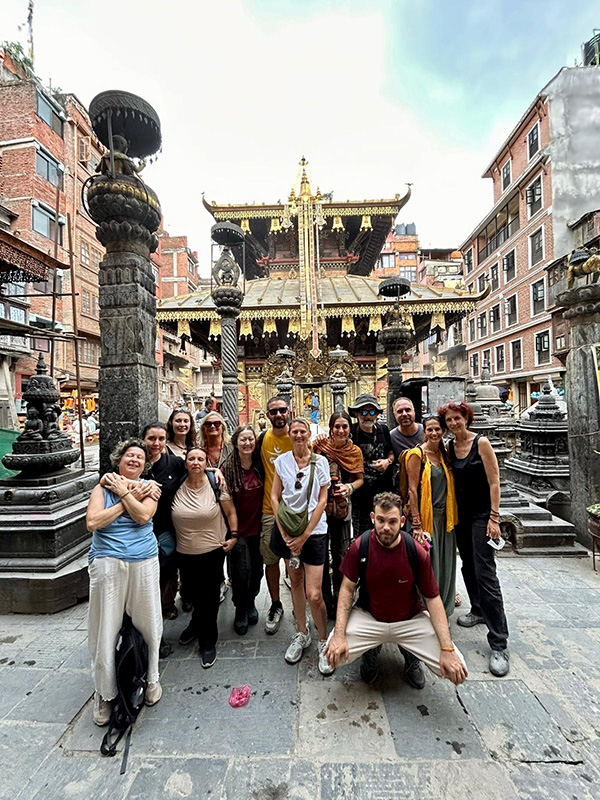
From 28 August onwards, Lama Caroline was waiting for the pilgrims in Kathmandu. With her well-known informal style, she organised moments of meditation, visits to sacred sites, guru pujas and other activities, fostering a friendly and welcoming atmosphere among everyone. A group of about 20 people visited and prayed at the most important Buddhist sites in the valley, including the Guru Padmasambhava caves and the Vajrayogini temple in Pharping, the Pashupatinath crematorium, and the great stupas of Boudha and Swayambhu. On the upper floor of the Boudha stupa, Lama Caroline led a long Tantric Self-Healing practice.
From 8 September onwards, amid the youth protests, riots and acts of vandalism followed by the fall of the government, Lama Caroline proposed a short retreat to encourage a return to calm and peace. At that moment, Lama Caroline demonstrated a truly profound stability and serenity, helping the small group of women who were with her to feel safe. Despite the unrest they saw and heard from the terrace of the Drubkhang, her presence was able to reassure everyone. The retreat ended with the precious initiations of Green Tara and White Tara when the city had returned to its usual atmosphere of lively and noisy harmony.
The enthronement of the 26th Tsem Tulku Rinpoche
Tsem Rinpoche, one of the most followed and beloved masters of Vajrayana Buddhism of this century, left his body in 2019. In August, Fortunato Sambataro flew to Malaysia to honour the enthronement of his reincarnation, a three-and-a-half-year-old boy born, who was given the name Tsem Rinpoche Drakpa Tenzin. Sent by Lama Michel Rinpoche on behalf of Kunpen Lama Gangchen, Fortunato was welcomed at the airport by members of the Malaysian Sangha who accompanied him to the Buddhist centre known as Kechara Forest Retreat, located two hours’ drive from the capital.
The ceremony, which consisted of a Guru Puja with Tsog offerings and a long-life puja, was attended by distinguished masters, including the abbot of Phelgyeling Monastery, His Eminence Khen Rinpoche Lobsang Palden, and the two oracles of Dorje Shugden, His Eminence Panglung Choeje Rinpoche and the Venerable Kuten Lama. The monasteries of Sedgyu, Serpom, and Shar Ganden sent their representatives, and hundreds of monks and laypeople were present.
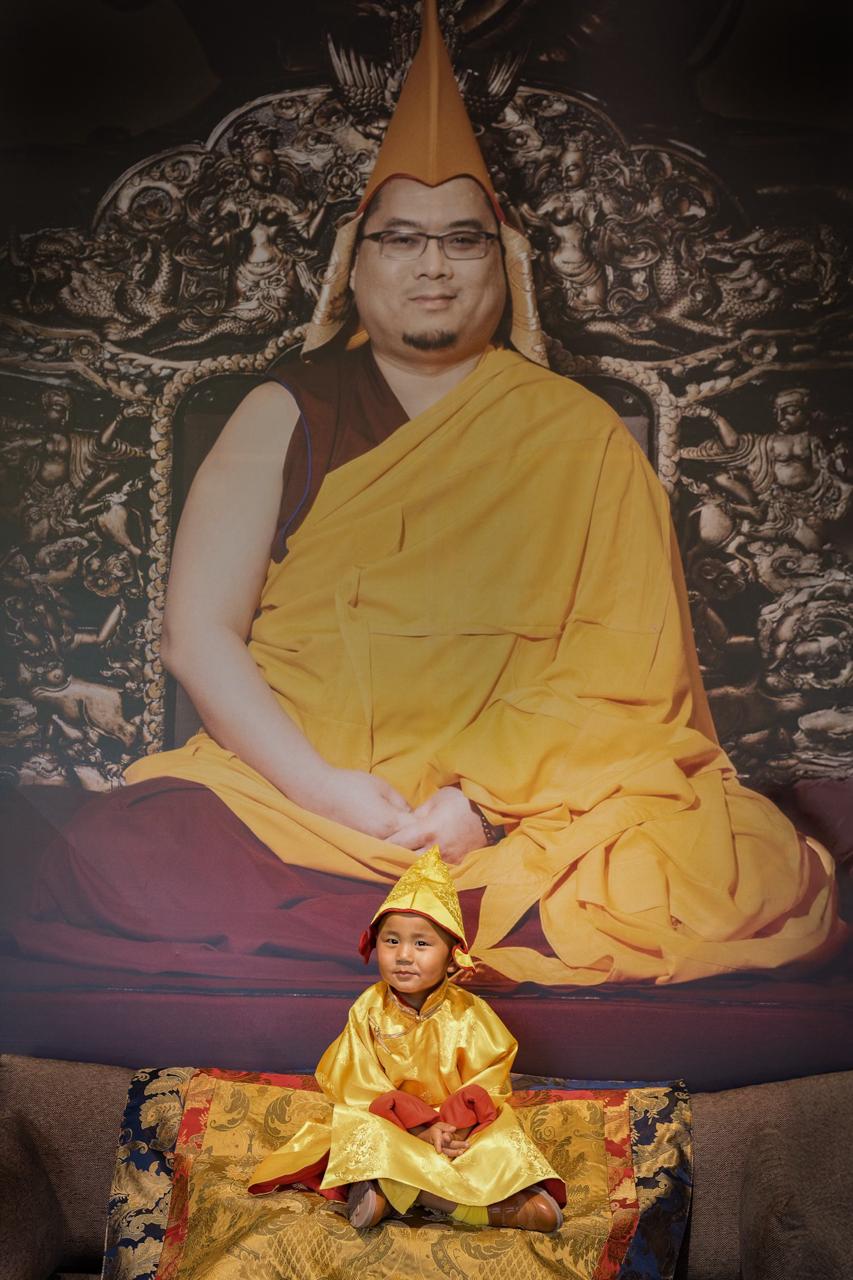
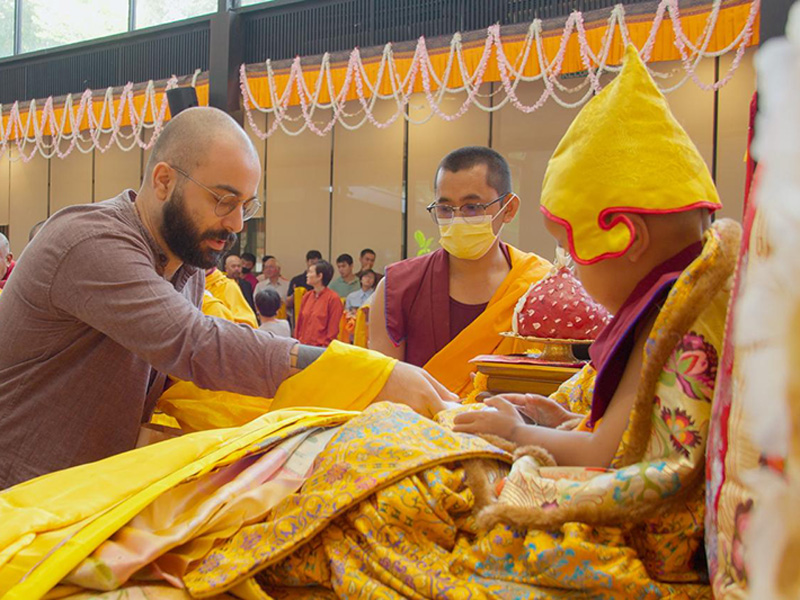
Fortunato tells us that it was deeply moving to see Tsem Rinpoche’s longtime disciples approach the throne with gifts and sacred objects and treat the young reincarnation with extreme affection and attention, as naturally as a parent treats their child. Furthermore, on a personal level, he considered this occasion a precious gift: having discovered a strong connection with the 25th Tsem Rinpoche, even though he had never met him, he was truly happy to be able to witness this historic moment.
The ceremony concluded with a display of Chinese and Indian dances and songs, and performances by talented Malaysian musicians, as well as speeches of thanks given by Tsem Rinpoche’s senior disciples. Fortunato also felt the presence of Lama Gangchen Rinpoche very strongly in the speeches and stories about the 25th Tsem Rinpoche: Lama Gangchen, in fact, was one of the first to recognise him as a reincarnation and supported him in all his activities. For his part, Tsem Rinpoche considered Lama Gangchen one of his main teachers, treating him with affection and respect and sending his disciples to receive his blessings and offer gifts. In April 2006 Tsem Rinpoche offered Lama Gangchen the statue of Dorje Shugden, which today stands in the Dharmapala gompa.
The Sangha of Albagnano Healing Meditation Centre rejoices at the 26th reincarnation of Tsem Rinpoche, wishes him long life, and wishes abundant benefits to all beings who meet him.
September between two eclipses: An opportunity to shine

In September 2025, two eclipses occurred within two weeks: a lunar eclipse on September 7th and a solar eclipse on September 21st. Guilherme Fortunato Bitencourt, astrologer and Sangha member, offered us an extremely interesting interpretation of these unique events, which push us toward external and internal changes. While eclipses have been considered a bad omen in all cultures, Guilherme explained that they also offer an opportunity: they invite us to return to the centre of our being.
According to Indian Vedic astrology, the lunar eclipse of Phurba Bhadrapada on September 7th manifested the energy of Aja Ekapada, or the “fire that destroys the universe”: in this moment we feel the need to rid ourselves of what oppresses us and that we can no longer tolerate. The social movements and protests that took place around the world in those days and the days that followed took on precisely this meaning: no more corruption, no more inadequate political systems, we want our rights back, we want participation. On a personal level, the eclipse is an invitation to ask ourselves: what do we want to get rid of and what do we want to achieve in our lives? What are we tired of, and in what direction do we want to bring about change?
The eclipse of September 7th was also an opportunity to develop our spiritual potential. The moon was in trine with Jupiter, and Jupiter was moving toward the moon. Jupiter is the symbol of the guru. Those who work as teachers and therapists, for example, may have been more strongly influenced and felt a certain difficulty in believing in their own values and beliefs. Guilherme explained to us that, precisely in these moments, it is crucial to strengthen our motivation to follow our convictions, banishing doubts.
The solar eclipse of Uttara Phalguni, however, manifested itself under the sign of the deity Aryaman and Virgo. Aryaman acts like a ticket inspector on a train: he comes to verify whether we are keeping our promises and actually fulfilling our life plan. Virgo, on the other hand, after a period of destruction, comes to restore order and harmony. September 21st marked the beginning of a period of renewal, during which it is important to keep our vows and reconnect with our life plan, consistent with what we have decided to do and be. Finally, with the second eclipse, communication, which had been interfered with by Mercury retrograde, returned to normal thanks to the conjunction with Mercury.
In Buddhism, the practice of Maritse, one of the 21 Taras, is recommended during eclipses. Maritse represents the light of the sun and comes to remind us that we are light. Even in moments of darkness and shadow, we must remember our inner light that expands from our heart. The information that Guilherme offered us, thanks to his knowledge of Indian Vedic astrology, is to be considered invaluable both because the effects of the eclipses will last for three months and because they may also be useful in the future.